|
LECAR-UFF Researchers Participate in the 16th International Coral Reef Symposium (ICRS 2026)
From 19 to 24 July 2026, researchers and students from the Laboratory of Reef Ecology and Conservation
(LECAR-UFF) participated in the 16th International Coral Reef Symposium (ICRS), organized by the International
Coral Reef Society and held in Auckland, New Zealand. The 2026 edition was one of the largest in the history of the
symposium, bringing together more than 2,100 participants from 93 countries, including approximately 50 Brazilian
scientists. Throughout the five-day meeting, the latest scientific advances in coral reef research were presented,
covering a broad range of topics, including reef fish ecology, climate change, coral bleaching, ecosystem
restoration, biodiversity conservation, and long-term ecological monitoring. Representing LECAR-UFF, Aléxia
Lessa, Juliana Fonseca, Lucas Nunes, Leonardo Rafalski, Thiago Mendes, Linda Eggertsen, Natalia Roos, Cesar
Cordeiro, and Carlos Ferreira, together with collaborators, presented the results of ongoing research developed
within the laboratory and its partner institutions. Their presentations addressed a wide variety of subjects, including
fish bioacoustics, fish productivity, trophic modelling, cryptobenthic fish communities, coral bleaching, reef fish
planktivory, and other aspects of reef ecology and conservation. The studies were presented through both oral
presentations and posters, highlighting the significant contribution of Brazilian reef science to the international
research community. A major theme throughout the symposium was the growing scientific consensus regarding
the accelerating impacts of climate change and other anthropogenic pressures on coral reef ecosystems
worldwide. In addition to documenting the ongoing degradation of tropical reefs, the conference emphasized the
urgent need to expand robust conservation, restoration, and adaptation initiatives, while strengthening the
integration of scientific research with environmental management and public policy. One of the most important
announcements made during the symposium was that the 17th International Coral Reef Symposium (ICRS 2030)
will be hosted in Rio de Janeiro, Brazil. Bringing the world’s largest coral reef conference to Brazil represents a
unique opportunity to increase the participation of researchers, students, managers, and conservation practitioners
from the Global South, particularly those working in the South Atlantic region. It is also expected to strengthen
international scientific collaboration and further increase the visibility of reef research conducted in Brazil.
Conference programme and abstract book:
https://innovators-icrs2026programme.eventsairsite.com
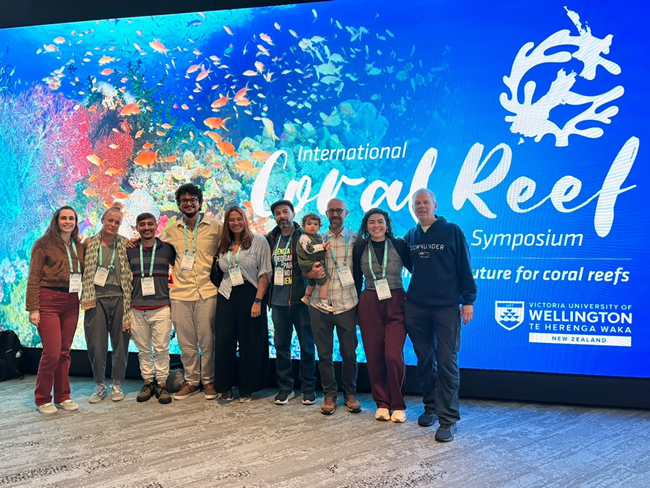
Members and associate researchers of the Laboratory of Ecology and Conservation of Reef Environments
(LECAR-UFF) (LECAR-UFF)
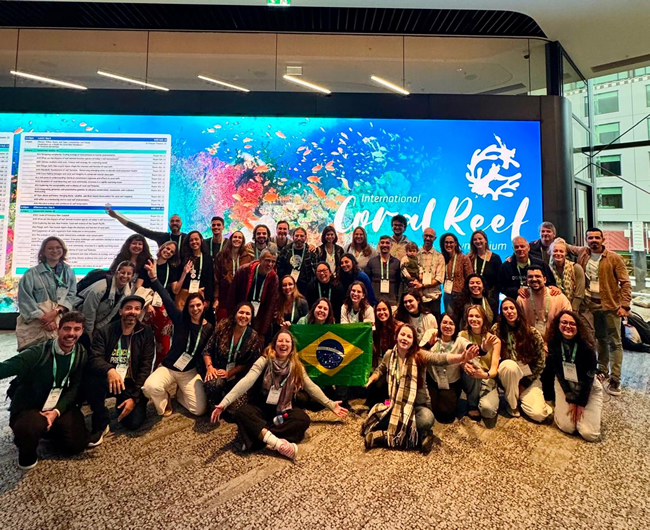
Brazilian delegation attending the 2026 International Coral Reef Symposium in Auckland, New Zealand
|